

Everest Base Camp Trek
Starting from
US$3599 P/P
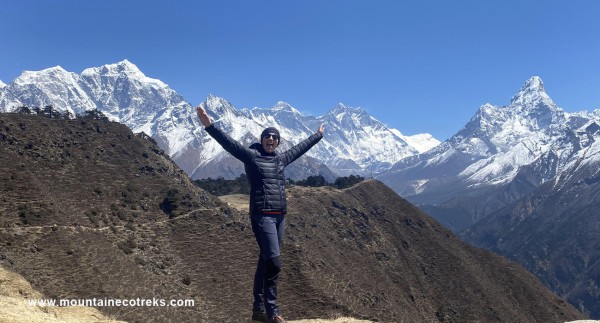
Some treks take you to a place. The Everest Three High Passes Trek takes you through an entire world. This is not a walk to a single destination - it is a full loop through the Khumbu region of the Nepal Himalayas, crossing three high-altitude passes, weaving through ancient Sherpa villages, and placing you face to face with some of the highest mountains on Earth. If the standard Everest Base Camp Trek feels like the opening chapter, this is the whole story.
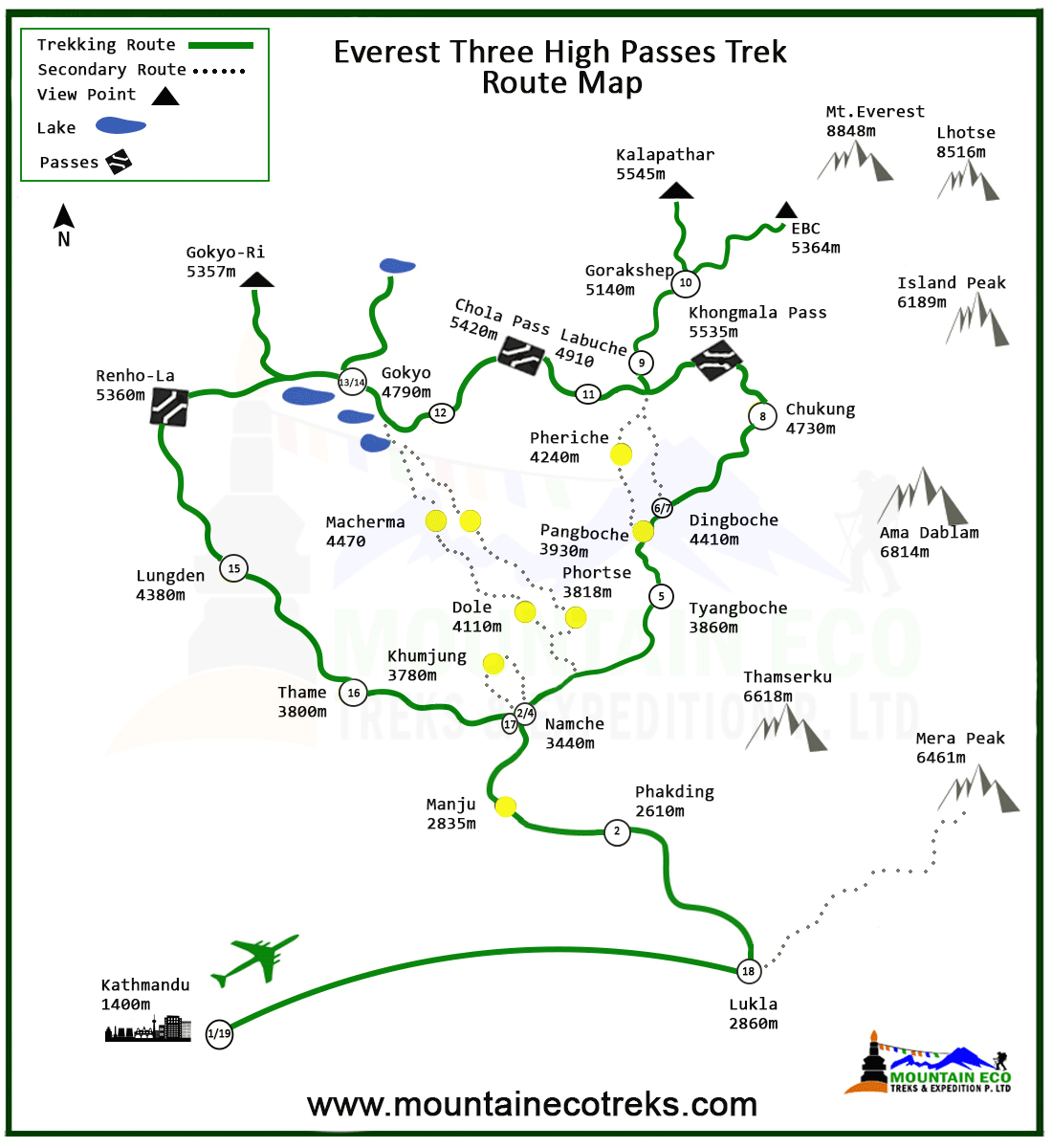
The three passes define everything about this journey. Kongma La (5,535m) is the highest and most demanding - a steep, glacier-edged crossing above Chhukung where Lhotse, Makalu, and surrounding ice fields stretch endlessly in every direction. Cho La (5,420m) connects the Khumbu Valley to the Gokyo Valley across a dramatic glacier where every careful step feels earned. Renjo La (5,360m) is the final pass and perhaps the most visually stunning - a ridge above the turquoise Gokyo Lakes with an open horizon of Mount Everest, Cho Oyu, and the full sweep of the Khumbu Himal. Trekkers wanting the lake experience on its own can explore our Gokyo Lake Trek as a quieter alternative.
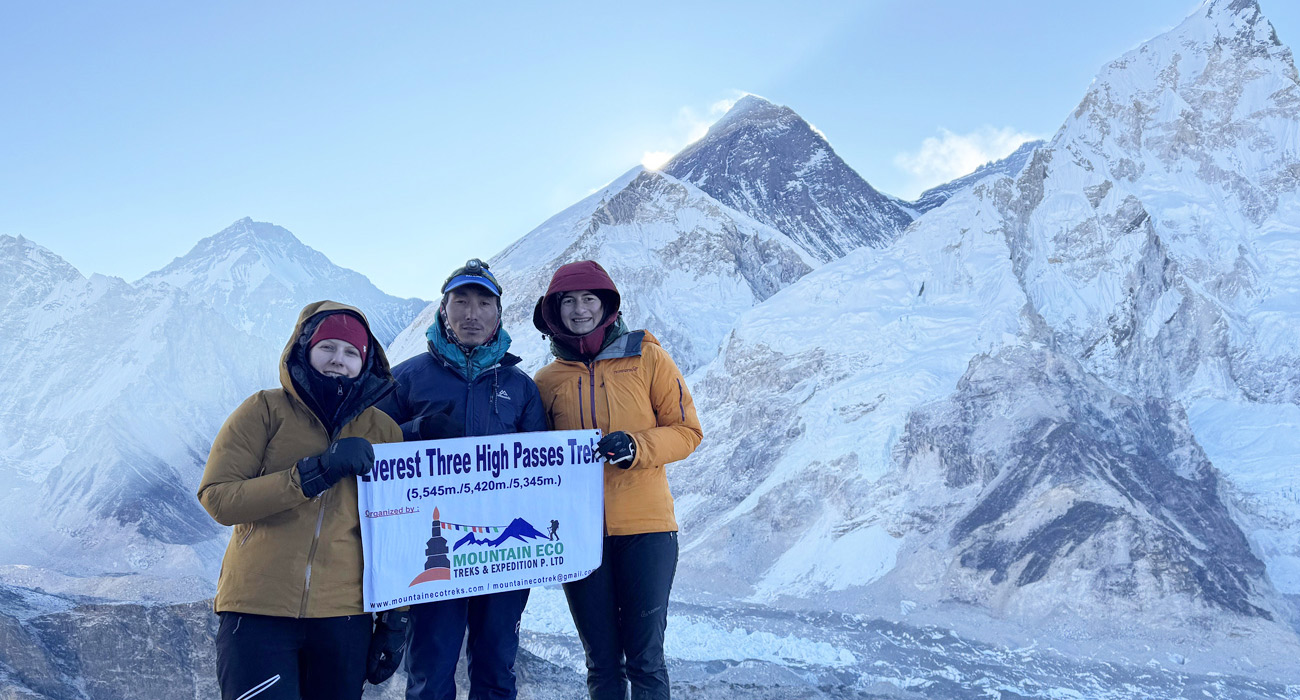
The ascent follows the beloved Khumbu trail - rising from Namche Bazaar past the sacred Thyangboche Monastery, through the wide pastures of Dingboche, into the remote valley of Chhukung, and onward to Gorak Shep and Everest Base Camp (5,364m). Standing at Kala Patthar (5,545m) as first light hits Everest's south face is a moment that never leaves you. The return then peels away in a completely different direction - back through the Gokyo Valley and out over Renjo La, two entirely different worlds on the way up and back down. For a different take on the same landscapes, the Everest Base Camp with Gokyo Lake Trek offers a wonderful variation.
This is a serious undertaking best suited for fit trekkers with some high-altitude experience. The circuit runs 18 to 21 days from Lukla with proper acclimatization built in throughout. Those needing a quicker return can choose the Everest Base Camp Trek with Helicopter Return - a scenic flight that ends the adventure in style.
Spring (March to May) and autumn (September to November) are the prime seasons. At Mountain Eco Treks, our local guides have walked every meter of this route and will be beside you the whole way. A Sagarmatha National Park permit is included in your package. Come ready - this trek will show you the Himalayas at their most raw and magnificent.
The Everest Three High Passes Trek is physically demanding and requires:
Trekkers will encounter steep ascents, rocky paths, glaciers, snow, and high winds. Proper preparation, acclimatization, and a slow, steady pace are crucial for a safe and successful trek.
If the Everest Three High Passes trek itinerary does not meet your needs, we can design personalized travel plans based on your preferences and specifications. Plan Your Trip
Note: Mountain Eco Treks offers this trekking itinerary in two service categories- Standard, and Budget-allowing you to choose the level of comfort that best matches your travel preferences. For a complete breakdown of what each package includes, please visit the Cost Includes and Excludes section
Welcome to Nepal - the starting point of your Everest Three High Passes Trek! Our team will greet you at Tribhuvan International Airport and transfer you to your hotel in Thamel. Use this day to rest and check your high-altitude trekking gear. Tonight, meet your guide and discuss your 18-day Everest Three High Passes Trek itinerary ahead.
Your Everest Three High Passes Trek begins with a thrilling 35-minute flight to Lukla's Tenzing-Hillary Airport. The trail descends gently through pine forests and traditional Sherpa settlements along the Dudh Koshi River, crossing suspension bridges decorated with prayer flags, to the peaceful village of Phakding for your first overnight on this high-altitude trekking adventure in Nepal.
✈ Flight Note: Flights operate either direct from Kathmandu or via Manthali Airport (Ramechhap) - a 4-5 hour drive. Peak season (March-May, September-November) flights are mostly routed through Manthali. Mountain Eco Treks will confirm your departure point in advance.
The trail winds along the Dudh Koshi River, crossing suspension bridges and entering Sagarmatha National Park before the steep two-hour climb to Namche Bazaar. Your first glimpse of Mount Everest above the ridge makes every step worthwhile. Namche is the main hub of the Khumbu region trek - full of bakeries, gear shops, and warm teahouses.
Acclimatization is essential on the Everest Three High Passes Trek. Hike up to Hotel Everest View for stunning panoramas of Everest, Lhotse, Nuptse, and Ama Dablam, then return to Namche to visit the Sherpa Culture Museum. Rest well, stay hydrated, and prepare your body for the high-altitude Himalayan passes ahead.
The trail climbs through fragrant rhododendron and juniper forests with sweeping views of Everest, Lhotse, Nuptse, and Ama Dablam. Arrive at Thyangboche Monastery - the most sacred monastery in the Khumbu region, perched on a forested ridge at nearly 4,000 metres. Attending the evening prayer ceremony here is an unforgettable cultural experience on the Everest Three High Passes Trek.
The trail descends to the Imja Khola valley before climbing steadily through open yak pastures and alpine meadows. The scale of surrounding peaks - Island Peak, Lhotse, and the Nuptse wall - grows more dramatic with every step. Dingboche is a beautiful high-altitude village sitting in a wide valley enclosed by ancient stone walls, marking your first night above 4,000 metres on the Everest Three High Passes Trek.
A vital rest day before tackling the three legendary high passes ahead. Hike to Nangkartshang Peak or Chhukung Ri for sweeping 360° views of Makalu, Baruntse, Island Peak, and the full Lhotse-Nuptse wall. Return to Dingboche in the afternoon, rest well, and hydrate - the most demanding and rewarding days of the Everest Three High Passes Trek lie just ahead.
A short but important walk deeper into the Imja Valley at 4,730 metres. Chhukung is a small remote settlement sitting directly beneath the towering faces of Island Peak, Ama Dablam, and the Lhotse-Nuptse wall - one of the most dramatic settings on the Everest Three High Passes Trek. Arrive early, eat well, and rest - tomorrow is the biggest day yet.
The first and highest of the three Himalayan high passes, Kongma La at 5,535 metres demands an early start and a steady climb through rocky moraines and frozen terrain. At the summit, prayer flags frame panoramic views of Makalu, Baruntse, Cho Oyu, and the entire Khumbu range. Descend past glacial lakes and the solemn Lobuche memorial chortens to Lobuche village for overnight rest.
The most iconic day of the Everest Three High Passes Trek. Cross the Khumbu Glacier moraine to Gorakshep, then push on to Everest Base Camp at 5,364 metres inside Sagarmatha National Park. Standing at the foot of the world's highest mountain with the thundering Khumbu Icefall before you is a moment that stays with you for life. Return to Gorakshep for overnight rest.
A pre-dawn climb to Kala Patthar at 5,644 metres - the highest point of the Everest Three High Passes Trek and the finest viewpoint of Mount Everest on earth. Watch the sunrise light up the Everest summit in golden colour before descending west across dramatic glacial terrain. Arrive at the quiet remote settlement of Dzongla for the night, ready for the second great pass tomorrow.
Cho La is the most adventurous pass on the Everest Three High Passes Trek. The steep rocky ascent leads to a glaciated summit section where crampons are essential. On the descent, the turquoise Gokyo Lakes suddenly appear below - a breathtaking reward after a demanding day of high-altitude trekking in Nepal. Overnight at Gokyo village on the shores of the sacred third lake.
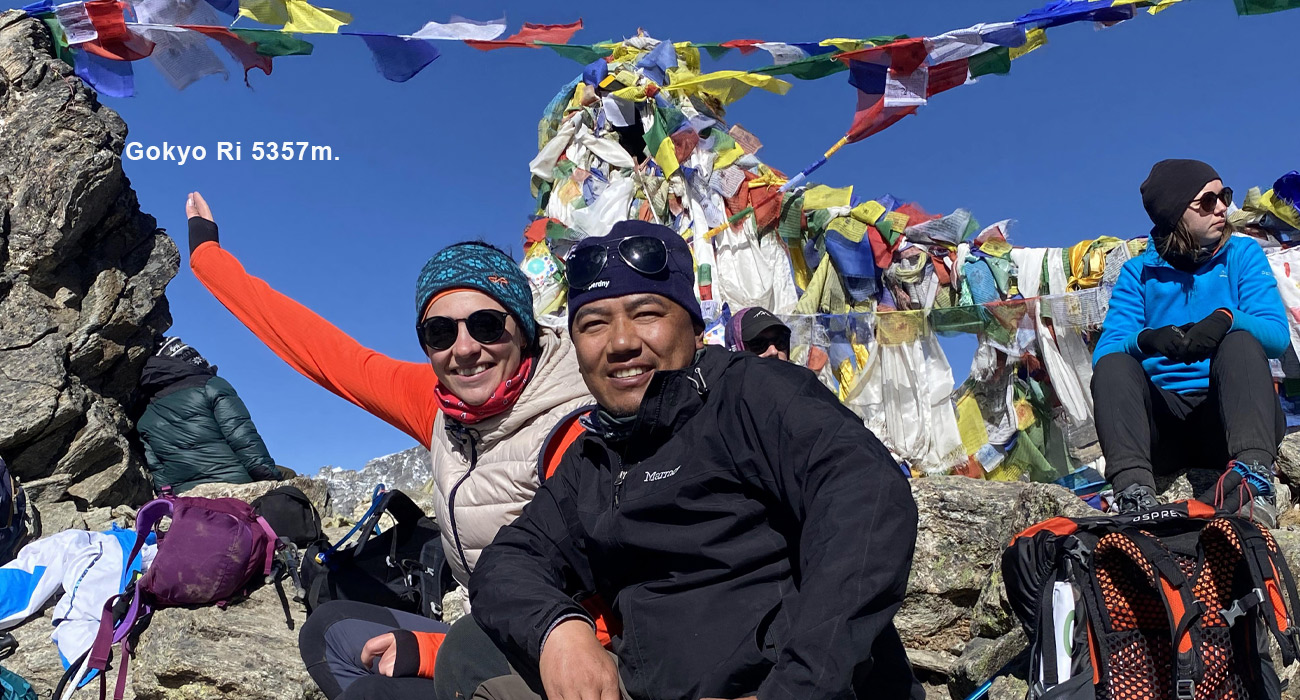
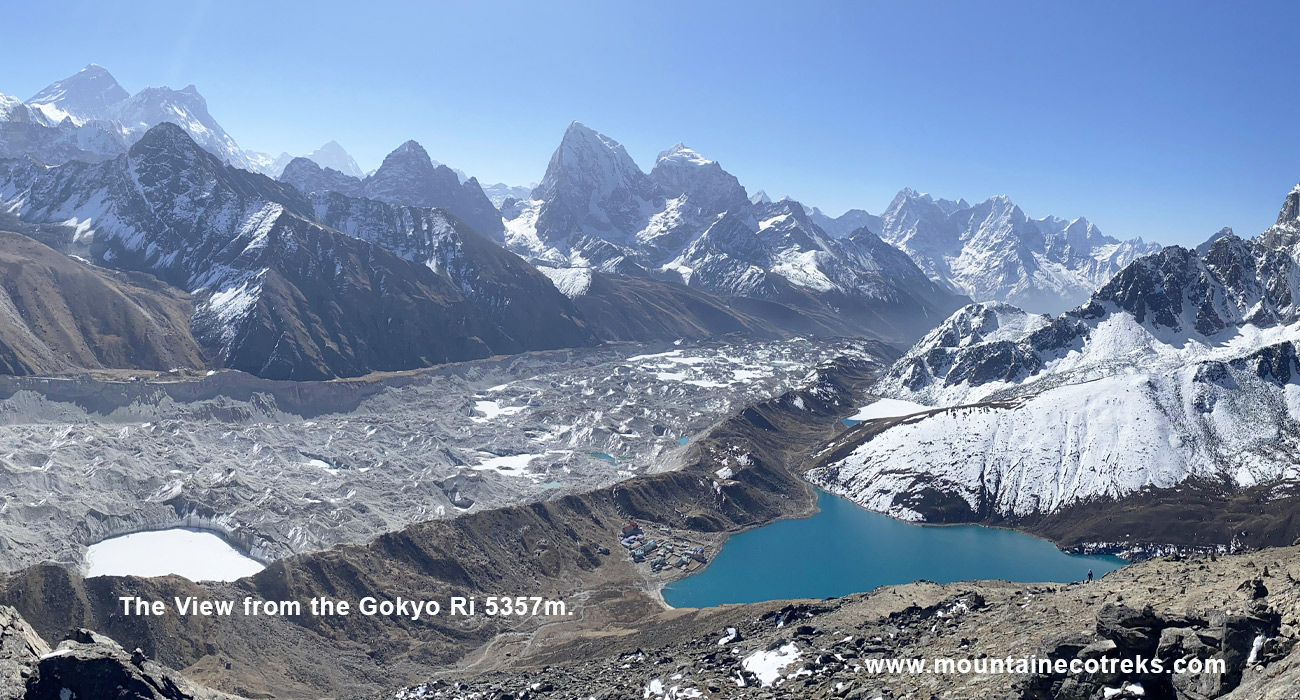
Gokyo Ri at 5,357 metres is one of the greatest highlights of the Everest Three High Passes Trek. From the summit, four of the world's six highest mountains are visible at once - Everest, Lhotse, Makalu, and Cho Oyu - along with the vast Ngozumpa Glacier below. Spend the afternoon exploring the sacred 4th and 5th Gokyo Lakes, their turquoise waters set against a backdrop of permanent glacial ice.
The third and final pass of the Everest Three High Passes Trek, Renjo La at 5,360 metres, rewards you with one of the most extraordinary views in Nepal - the sacred Gokyo Lakes and Ngozumpa Glacier far below, framed by the towering mass of Cho Oyu. Descend into the remote Bhote Koshi valley and reach the peaceful settlement of Lungden for overnight rest. All three legendary passes are now complete.
A pleasant walk downstream along the Bhote Koshi River through a quiet, authentic Sherpa valley. Thame is a historically significant village on the Everest Three High Passes Trek, best known as the childhood home of Tenzing Norgay Sherpa, who first summited Everest with Sir Edmund Hillary in 1953. Visit the ancient Thame Monastery perched above the village before settling in for the night.
A short and easy walk back to the familiar energy of Namche Bazaar. With all three high passes and Everest Base Camp behind you, tonight is the time to celebrate. Enjoy a hot shower, a well-deserved meal at one of Namche's excellent restaurants, and reflect on the incredible achievement of completing the Everest Three High Passes Trek so far.
The final walking day of the Everest Three High Passes Trek is a long, satisfying descent through Monjo, Jorsale, and Phakding, crossing familiar suspension bridges one last time. Warmer air and greener forests mark the return to lower altitude. Arrive in Lukla with tired legs and incredible memories - celebrate with your guide and porters over dinner at one of Lukla's famous teahouses.
Rise early for your morning flight back to Kathmandu, marking the successful completion of the Everest Three High Passes Trek. Back in the capital, transfer to your hotel and take a moment to fully absorb this remarkable achievement - three legendary Himalayan passes above 5,000 metres, Everest Base Camp, and Kala Patthar, all completed in 18 days.
✈ Flight Note: Return flights from Lukla operate either directly to Kathmandu or via Manthali Airport (Ramechhap), which is approximately a 4–5 hour drive from Manthali to Kathmandu. During peak trekking seasons (March–May and September–November), most flights are routed through Manthali. Mountain Eco Treks will confirm your exact departure point ahead of your trip.
Service Types
Compare the available package types and choose the service level that matches your comfort, budget, and support needs.
Standard Package Cost
US$ 1899 per person
Budget Package Cost
US$ 1595 per person
The Everest Three High Passes Trek is a high-altitude circuit in Nepal's Khumbu Himalaya, typically completed in 18 to 20 days depending on the itinerary and acclimatisation schedule. The route crosses three mountain passes - Kongma La (5,535 m), Cho La (5,420 m), and Renjo La (5,360 m) - and also includes Everest Base Camp (5,364 m), the Gokyo Lakes, and Kala Patthar (5,545 m). It is the most complete trekking adventure in the entire Everest region.
It is rated Grade 5 - strenuous to extreme. Trekkers walk 6 to 8 hours daily over 130 to 160 km of rugged Himalayan terrain, cross glaciers, and spend multiple nights above 4,500 m. It is significantly harder than the standard Everest Base Camp Trek. Prior high-altitude trekking experience and 3 to 6 months of physical training are strongly recommended.
Spring (March–May): Clear skies, mild temperatures, rhododendron blooms.
Autumn (September–November): Best visibility, most stable passes, driest conditions.
October and November are the single best months. Avoid the monsoon (June–August) due to heavy rain and slippery glaciers, and winter (December–February) due to deep snow and extreme cold on the passes.
Although it's possible to trek independently, it's highly recommended to hire a licensed guide due to the challenging terrain and unpredictable high-altitude weather.
The total cost ranges from USD 1,550 to USD 1950+ per person depending on the package and services chosen.
Mountain Eco Treks' standard guided package starts from USD 1,950 per person and includes permits, tea house accommodation, three daily meals, a licensed guide, porter, and round-trip Lukla flights. Budget an additional USD 200 to 300 for personal expenses and USD 100 to 300 for travel insurance.
You will be able to get laundry services in Namche. You won’t get this service in other parts of the Everest base camp trek. If you are really necessary to do laundry your cloth you will have to personally wash and tend. We recommend you bring an extra set of clothing as per necessity.
Two permits are required:
Sagarmatha National Park Entry Permit - approx. USD 25 for foreigners
Khumbu Pasang Lhamu Rural Municipality Permit - approx. USD 25
These permits are checked at various checkpoints throughout the Khumbu region, including Monjo and Namche Bazaar. Always carry your permits at all times on the trail. Mountain Eco Treks arranges all required permits as part of every guided trek package.
The standard duration is 16 to 20 days, including essential acclimatisation rest days. Trekkers walk 5 to 7 hours per day covering 10 to 15 km. Mountain Eco Treks recommends adding 1 to 2 buffer days before your return flight to allow for Lukla flight delays, which are very common due to mountain weather.
in the last few decades where most of the rural villages do have proper communication wither by cell- phone (mobile our guides will be in touch with the head office through their cell phone. Sometimes Cell-Phone do works and don'ts as Nepal is a hilly and mountainous country with a deep gorge and valley, where cell phone works on high hills, and might not when in a deep gorge hidden by hills and mountains. The chances of a working cell phone are most positive you can try using a local popular SiM card.
The trek starts in Lukla (2,860 m), reached by an approximately 30 to 35-minute domestic flight from Kathmandu. During peak season, flights often depart from Ramechhap Airport (4 to 5 hours from Kathmandu) to reduce congestion. Lukla flights must be booked well in advance. Mountain Eco Treks handles all domestic flight bookings and airport transfers for every trekker.
Mountain Eco Treks recommends the clockwise direction - Kongma La first, then Cho La, then Renjo La. This direction suits the acclimatisation schedule best, allows an early visit to Everest Base Camp while energy is highest, and saves the scenic Gokyo Lakes valley and Renjo La panorama as a rewarding final highlight. The anticlockwise direction is also possible for experienced trekkers.
Altitude sickness is the most serious health risk on this trek. Symptoms of Acute Mountain Sickness (AMS) include headache, nausea, dizziness, and fatigue. If untreated, it can escalate to life-threatening HAPE (fluid in the lungs) or HACE (brain swelling).
Prevention tips:
Spend at least two nights in Namche Bazaar for acclimatisation
Follow the "climb high, sleep low" principle
Drink at least 3 to 5 litres of water daily
Never ascend more than 300 to 500 m per day above 3,000 m
Consult your doctor about Diamox before departure
Descend immediately if symptoms worsen
Mountain Eco Treks guides carry pulse oximeters and monitor oxygen saturation every day on the trail.
There is no age limit for this three-high passes trek we do not recommend very old people over 70 years and small kids under 10 years, you can do this if you are not suffering from any disease course, it will be challenging for young children under 10 and people over 70 years old but if you are in good shape and have strength endurance training, cardio workout, and hiking in your local mountains before the trek then surely you will do it Everest three high passes trek.
The trek is not recommended for complete beginners. However, first-time trekkers with excellent physical fitness, 3 to 6 months of training, and a fully guided itinerary with proper acclimatisation days can complete it successfully. Mountain Eco Treks recommends doing the standard Everest Base Camp Trek or Annapurna Base Camp Trek first as preparation. A pre-trek medical check-up is essential for all participants.
Independent trekking is currently permitted in the Everest region, although regulations may change. Hiring a licensed guide is strongly recommended for safety and navigation - particularly for glacier crossings, high-pass route finding, and altitude health monitoring. Mountain Eco Treks provides experienced, government-licensed guides at approximately USD 50 per day. Porter service is available at USD 20 to 30 per day and significantly reduces physical fatigue at altitude.
Comprehensive high-altitude travel insurance is mandatory. Your policy must cover:
Trekking above 5,000 m - most standard policies cap at 3,000 to 4,000 m, so check carefully
Emergency helicopter evacuation - can cost USD 5,000 to USD 7,000 without cover
Medical treatment for altitude illness and injury
Trip cancellation and delay for Lukla flight disruptions
Repatriation costs
Most gear can be rented affordably in Thamel, Kathmandu before departure.
The entire route is covered by tea house trekking - a network of basic mountain lodges offering twin-sharing rooms, shared or private bathrooms, and communal dining. Food options include Dal Bhat (the most nutritious trail meal), noodles, fried rice, momos, Tibetan bread, soups, and hot drinks. Food and accommodation costs increase significantly with altitude. Wi-Fi, hot showers, and device charging are available but charged separately. Mountain Eco Treks' packages include all meals from the first to the last day on the trail.
Everest Base Camp (5,364 m) - stand at the foot of the world's highest mountain
Kala Patthar (5,545 m) - the best sunrise viewpoint for Everest (8,848 m)
Gokyo Lakes - the world's highest freshwater lake system
Gokyo Ri (5,357 m) - 360° views of four 8,000 m peaks simultaneously
Renjo La Pass - the most scenic of the three passes with sweeping Everest views
Cho La Pass glacier crossing - the most thrilling physical challenge of the trek
Namche Bazaar - the vibrant Sherpa capital of the Khumbu at 3,440 m
Tengboche Monastery - the most sacred Buddhist monastery in the Everest region
Panoramic views of Everest, Lhotse, Makalu, Cho Oyu, Ama Dablam, and Pumori throughout the entire route
Mountain Eco Treks is a licensed local Nepal trekking company based in Kathmandu, founded by Ram Bahadur Tamang, a mountain leader with more than 15 years of trekking and expedition experience across Nepal and Tibet. Registered with the Nepal Tourism Board (NTB) and TAAN, we provide reliable trekking services with a strong focus on safety, local expertise, and responsible tourism.
We operate as a fully registered trekking company in Nepal with transparent services and recognized tourism affiliations.
Our NTB-certified guides are first-aid trained and have extensive experience leading trekkers on Nepal’s most popular Himalayan routes.
Daily acclimatization monitoring, proper trip planning, and emergency preparedness are part of every trek we organize.
From permits and transportation to accommodation, meals, and porters, we manage the logistics so you can focus on the journey.
No hidden charges and flexible options for private or group treks to suit different travel styles and budgets.
We support eco-friendly trekking practices, local communities, and initiatives that benefit villages and preserve the mountain environment.
Mountain Eco Treks & Expeditions (P) Ltd is a Nepal Government-registered trekking company based in Kathmandu, operating tours and expeditions across Nepal, Tibet, and Bhutan. Please read these terms before booking.
We accept Visa, Mastercard, and bank wire transfer. Additional bank charges may apply.
All cancellations must be made in writing.
| Notice Period | Charge |
|---|---|
| 50+ days | Deposit retained |
| 30 days | 50% of total |
| 2 weeks | 75% of total |
| 1 week or less | 100% - no refund |
A 20% non-refundable deposit applies in all cancellation cases. No refund is issued for incomplete trips or early departures from the itinerary.
If we cancel due to weather, natural disaster, or unrest, we offer an alternative trip or full refund. Any personal expenses (flights, visas) remain your responsibility.
Himalayan travel involves unpredictable weather, road conditions, and remote flight routes. We minimize disruptions where possible, but extra costs during delays are the client's responsibility. No refunds for itinerary changes beyond our control.
Mountain Eco Treks & Expeditions (P) Ltd 🌐 www.mountainecotreks.com
| Item | Details |
|---|---|
| T-Shirts | 3–4 moisture-wicking shirts |
| Fleece Jacket | Warm mid-layer for cold mornings |
| Down Jacket | Essential above 3,000 m |
| Waterproof Jacket | Wind and rain protection |
| Trekking Trousers | Quick-dry lightweight pants |
| Wool Socks | 3-4 warm trekking pairs |
| Gloves & Hat | Cold-weather protection |
| Buff / Scarf | Dust and wind protection |
| Item | Details |
|---|---|
| Trekking boots | Waterproof with ankle support |
| Sandals / slippers | Comfortable for evenings |
| Crampons / microspikes | Useful on snowy or icy sections of the trail |
| Item | Details |
|---|---|
| Daypack | 10-15L daily backpack |
| Trekking Poles | Reduces knee strain |
| Water Bottle | Refillable 2-liter bottle |
| Item | Details |
|---|---|
| Passport | Valid 6+ months |
| Nepal Visa | Required for entry |
| Travel Insurance | Includes evacuation coverage |
| Passport Photos | For permits and documents |
| Cash & Card | Local cash recommended |
| Item | Details |
|---|---|
| Painkillers | Headache and muscle relief |
| Anti-Diarrheal | For stomach issues |
| Bandages | Basic injury care |
| Sunscreen SPF 50+ | High-altitude UV protection |
| Lip Balm | Prevents dry lips |
| Prescription Medicine | Personal medical supply |
| Item | Details |
|---|---|
| Headlamp | With spare batteries |
| Sleeping Bag | Suitable for cold temperatures |
| Sunglasses | UV400 protection |
| Water Purification | Tablets or filter |
| Item | Details |
|---|---|
| Mobile Phone | Offline maps recommended |
| Camera | Extra batteries advised |
| Power Bank | High-capacity backup |
| Travel Adapter | Nepal 2-pin plug |
| Item | Details |
|---|---|
| Energy Bars | Quick trail snacks |
| Electrolyte Drinks | Hydration support |
Foreign nationals can obtain a Nepal tourist visa on arrival at Tribhuvan International Airport or at designated land border entry points from India and Tibet. Travelers can also apply for an online visa in advance through the official immigration system.
To apply for a Nepal visa, travelers need:
Visa fees and rules may change as per Nepal Immigration regulations.
Tourist visas can be extended at the Department of Immigration in Kathmandu.
Trekkers visiting national parks, conservation areas, and restricted regions such as the Everest Region, Annapurna Region, and Manaslu Region require trekking permits. Some restricted areas also require special permits issued through a registered trekking agency in Nepal.
Mountain Eco Treks is a trusted local trekking and tour company based in Nepal, offering professional trekking, tour, climbing, and adventure travel services across the Himalayas.
We organize:
Our team provides complete travel support including permits, transportation, accommodation, and guided trekking experiences across Nepal.
For official Nepal visa information, visit: https://immigration.gov.np/?utm_source=chatgpt.com
The Everest Three High Passes Trek loops through the entire Khumbu region, crossing Kongma La (5,535 m), Cho La (5,420 m), and Renjo La (5,360 m) in a single approximately 160 km circuit. It threads together Everest Base Camp, Kala Patthar, the Gokyo Lakes, and three remote high passes - covering terrain that most visitors to Nepal never see.
This is a route for trekkers who have already done time at altitude and want a genuine challenge. The days are long, some nights are very cold, and two of the three passes demand early starts and serious footing. The reward is a level of Himalayan immersion that shorter routes simply cannot match.
Total range: $1,850-$2,500 USD per person excluding international flights. Daily on-trail spend averages $60–$120 covering food, accommodation, and a shared guide and porter.
| Expense | USD | Notes |
|---|---|---|
| Nepal Visa | $30–$100 | 15, 30 or 90-day on arrival or e-visa |
| Trekking permits (2) | $50 | Sagarmatha NP $30 + Khumbu municipality $20 |
| Lukla flights (return) | $500–$575 | Depart from Ramechhap in peak season |
| Teahouse accommodation (18 nights) | $90–$270 | $5–$15/night; rises with altitude |
| Food (16 days) | $360–$630 | $30–$40/day |
| Licensed guide (18 days) | $450–$630 | Includes their food and accommodation |
| Porter - shared (15 days) | $180–$220 | ~$10–$13/person/day when shared between two |
| Travel insurance | $50–$150 | Must cover helicopter evacuation above 5,000 m |
| Personal extras + tips | $150–$300 | Showers, Wi-Fi, charging, guide and porter tips |
| Total (excl. international flights) | $1850–$2,740 |
In peak season, Lukla flights often depart from Ramechhap airport - a 4–5 hour road transfer from Kathmandu - adding $15–$25 per person. Device charging at teahouses runs $1–$2 per device. Guide and porter tips of $80–$130 total are a genuine cultural expectation, not optional. Altitude medication such as Diamox should be discussed with your doctor before departure; it is widely available in Kathmandu pharmacies.
Namche Bazaar is generally the last reliable place to withdraw cash on the route. Budget for roughly $400–$600 in personal spending above Namche to cover showers, Wi-Fi, snacks, bottled water, and tips over the remaining 15+ days.
The food story on this trek follows altitude closely - varied and surprisingly good in the lower valleys, stripped back and functional near the passes. Understanding what to expect at each stage means you eat smarter and carry the right personal supplies.
Namche Bazaar has genuine bakeries, yak steak, pizza, pasta, and real espresso. Enjoy the variety here — it is the best meal selection you will see for the next two weeks. Village teahouses below Namche serve eggs multiple ways, fresh bread, noodle soups, and momos alongside the ever-present dal bhat.
Menus narrow but remain adequate. Dal bhat is the reliable choice - rice with lentil soup, vegetable curry, and condiments, served hot with free additional portions. Garlic soup appears on most menus here and is genuinely useful for acclimatisation headaches. Skip meat dishes above Namche; supply chains at this altitude make freshness unreliable.
At Lobuche, Dzongla, and Lungden, kitchen capacity and ingredient supply are both limited. Expect dal bhat, tsampa porridge (roasted barley - a Sherpa staple at altitude), boiled potatoes, and noodle broth. Order as soon as you arrive; cooking at 5,000 m takes significantly longer than at lower elevations. On the actual pass-crossing days, pack personal snacks - the trail offers nothing for 6–8 hours between villages.
Ginger-lemon tea and hot lemon water are the most practical warm drinks at any elevation. Bottled water prices rise sharply above Namche; water purification tablets purchased before departure are a more economical alternative and just as safe. Three to four litres per day is the minimum at altitude. Alcohol suppresses the respiratory response to low oxygen - avoid it above 3,500 m.
Bottom line: Both directions cover the same ~160 km in 16–18 days. Anticlockwise (Kongma La first) gives the most gradual acclimatisation and is recommended for most trekkers. Clockwise (Renjo La first) is quieter but ends with the hardest pass on the most tired legs.
Going anticlockwise, trekkers spend several days ascending gradually through the Namche–Dingboche corridor before hitting Kongma La - the highest and hardest crossing at 5,535 m. The body is better acclimatised, the risk of altitude sickness lower, and the descent into Lobuche is done with fresher legs. From there the circuit flows naturally: Everest Base Camp, Kala Patthar, across Cho La to Gokyo, then over Renjo La to complete the loop. The difficulty curve makes sense in this direction.
Clockwise begins with Renjo La at 5,360 m - the least technical of the three - giving a gentler introduction to high-altitude crossing. The trade-off is Kongma La at the end, when fatigue is highest and its notoriously steep descent on the far side is hardest on the knees. Fewer groups choose this direction, so the trail is noticeably quieter - a meaningful advantage for trekkers who value solitude.
| Day | Route | Elevation | Distance | Hours |
|---|---|---|---|---|
| 1 | Arrival in Kathmandu | 1,400 m | — | — |
| 2 | Kathmandu → Lukla flight, trek to Phakding | 2,860 m → 2,652 m | 7.8 km | 3–4 hrs |
| 3 | Phakding → Namche Bazaar | 3,440 m | 10.7 km | 5–6 hrs |
| 4 | Acclimatisation day — Namche Bazaar | 3,440 m | — | — |
| 5 | Namche Bazaar → Thyangboche Monastery | 3,867 m | 9.5 km | 5 hrs |
| 6 | Thyangboche → Dingboche | 4,410 m | 8.5 km | 5–6 hrs |
| 7 | Acclimatisation day — Dingboche | 4,410 m | — | — |
| 8 | Dingboche → Chhukung | 4,730 m | 4.5 km | 2–3 hrs |
| 9 | Chhukung → Kongma La Pass → Lobuche | Pass 5,535 m · Lobuche 4,940 m | 10 km | 7–8 hrs |
| 10 | Lobuche → Everest Base Camp → Gorak Shep | EBC 5,364 m · Gorak Shep 5,164 m | 12.5 km | 7–8 hrs |
| 11 | Kala Patthar hike → trek to Dzongla | Kala Patthar 5,644 m · Dzongla 4,830 m | 13.5 km | 7–8 hrs |
| 12 | Dzongla → Cho La Pass → Gokyo | Pass 5,420 m · Gokyo 4,800 m | 9 km | 7–8 hrs |
| 13 | Gokyo Ri hike + 4th & 5th Gokyo Lakes | Gokyo Ri 5,357 m | 10 km | 6–7 hrs |
| 14 | Gokyo → Renjo La Pass → Lungden | Pass 5,360 m · Lungden 4,380 m | 11.4 km | 7–8 hrs |
| 15 | Lungden → Thame | 3,800 m | 8 km | 4–5 hrs |
| 16 | Thame → Namche Bazaar | 3,440 m | 5 km | 3–4 hrs |
| 17 | Namche Bazaar → Lukla | 2,860 m | 18.5 km | 6–7 hrs |
| 18 | Lukla → Kathmandu flight (direct or via Manthali) | 1,400 m | — | — |
Kongma La - 5,535 m
The highest point of the entire circuit and the most physically demanding day. From Chhukung at 4,730 m, the trail climbs steeply over rocky moraines for 4–5 hours with no technical section - just sustained altitude and gradient. The summit opens to a wide panorama: Nuptse, Lhotse, Makalu, and the Khumbu Icefall filling the horizon. Leave no later than 6:00 AM; afternoon winds on the exposed upper section can be brutal. The descent to Lobuche is long and tests the knees on loose scree. Teahouses at Lobuche are basic but adequate.
The most technical crossing of the three, due to a genuine glacier section just below the summit. The ice is uneven and sloped; one bad step matters here. Microspikes or crampons are often recommended when Cho La is icy or snow-covered, particularly in colder months - they can be rented in Dzongla for $5–$10 per day before the crossing. The 3–4 hour approach from Dzongla is straightforward until the final push onto the glacier. Cross with your guide, never alone, and never in poor visibility. The descent into Thagnak and on to Gokyo is steep but manageable, and Gokyo itself - lake views, warm teahouses, good food - feels like a genuine reward.
The least technical of the three and, for many trekkers, the most visually striking. From the summit, the view spans Everest, Lhotse, Makalu, Cho Oyu, and Gokyo Lake laid out far below in vivid turquoise — a panorama that tends to silence experienced trekkers mid-sentence. The ascent from Lungden is steady and well-marked. The upper section of the descent on the Thame side is steep before the gradient eases. Food options at Lungden before the pass are very limited; pack your own snacks for the crossing.
Every night on this circuit is spent in a teahouse - a family-run lodge where the dining room is warm and communal and the bedroom is functional and cold. The quality range is wide: Namche has comfortable rooms with some attached bathrooms; Dzongla and Lungden have plywood walls and no hot water. Both are part of the same experience.
Standard rooms are twin-share with foam mattresses, pillows, and one or two blankets. Rooms are not heated. A sleeping bag rated to -15°C is essential - temperatures inside rooms near the high passes can drop well below freezing overnight. Private rooms are available at lower-altitude villages for an additional cost, but become less common above 4,000 m.
Shared Western-style toilets are standard in most villages below 4,500 m. Higher up, facilities become more basic. Hot showers ($4–$6) are solar-heated and only warm before 3 PM - take them early or skip them. A small number of very high camps have no hot water at all.
Solar and small hydro-electric systems provide power in most villages. Device charging costs $4–$6. Wi-Fi ($5–$10 per session) is available below 4,500 m but unreliable above it. A local SIM card from Ncell or NTC - available at Kathmandu airport - generally provides better connectivity at higher elevations and costs significantly less per day.
Interrupted sleep, unusual breathing patterns, and vivid dreams above 4,000 m are standard physiological responses to reduced oxygen - not signs that something is wrong. They improve over acclimatisation days. The nights at Lobuche, Dzongla, and Lungden are typically the most disrupted. If poor sleep is accompanied by a persistent headache that does not respond to water and rest, or by confusion or coordination problems, those are the warning signs that require descent.
| Factor | EBC Trek | Three High Passes Trek |
|---|---|---|
| Total distance | ~130 km | ~160 km |
| Duration | 12–14 days | 18–20 days |
| Maximum altitude | 5,545 m (Kala Patthar) | 5,535 m (Kongma La) |
| Pass crossings | None | 3 — including one glacier section |
| Gokyo Lakes | Side trip only | Core route |
| Daily food + bed cost | $25–$45 | $25–$50 |
| Total cost | $1,200–$1,800 | $1,850–$2,500 |
| Crowd level (Oct–Nov) | Very high | Moderate |
| Recommended for | First-time Himalayan trekkers | Trekkers with prior altitude experience |
Choose EBC if this is your first time above 3,500 m, you have 12–14 days, or you want well-supported trails with consistent teahouse cover and a dense trekking community around you.
Choose Three High Passes if you have logged previous days above 4,000 m, you have 18–20 days, and you want the full Khumbu picture in a single circuit - base camp, the lakes, three high passes, and valleys that see a fraction of the EBC traffic.
Worth knowing: Kongma La, Cho La & Renjo La Pass Guide Trek costs 30–40% more than EBC and adds 6 days - but it covers substantially more ground, includes the Gokyo Lakes as a core feature rather than a detour, and delivers a meaningfully different experience of the Khumbu. For experienced trekkers, the additional investment is justified.
October and November are the strongest months — post-monsoon skies are consistently clear, pass conditions are stable, and mountain views are at their most defined. This is also the busiest period on the trail. March and April offer an excellent spring alternative: rhododendron forests below treeline, rising temperatures, and generally reliable pass conditions, though afternoon cloud is common in late April. May is passable early in the month before pre-monsoon instability sets in.
June to September is monsoon season - sustained rain, low cloud, trail erosion, and leeches on lower paths. This circuit is not recommended during that window. December to February is possible for cold-weather experienced trekkers, but some teahouses above 4,000 m close seasonally, pass conditions can be severe, and rescue logistics are significantly more complex.
Two permits are required for this trek. The Sagarmatha National Park Entry Permit costs $25 and the Khumbu Pasang Lhamu Rural Municipality Permit costs $25 - a combined total of $50. Both are arranged in Kathmandu before your departure to Lukla. Your passport must remain valid for at least six months beyond your trek end date.
You May Also Like
US$3599 P/P
US$3950 P/P
US$1899
US$1995
P/P
US$1580 P/P
US$3875 P/P
US$3295 P/P
US$1550
US$1685
P/P
US$1695
US$1899
P/P
Experience the best of Nepal with expert local guides, carefully planned itineraries, and personalized support from enquiry to departure. Tell us what you want to explore and we will help you build the right trip.
Call us: +9779803926665
Enquire on WhatsApp© 2011 - 2026 All rights reserved. Mountain Eco Treks & Expedition




Jrybak2016
Australia
Great tour guide
27 Apr 2018
Review of Mountain Eco Treks & Expedition
Ram is a first class English and Arabic speaking tour guide based in Kathmandu
Ram is prepared for any eventuality and conducts his tours seamlessly throughout the Nepal region
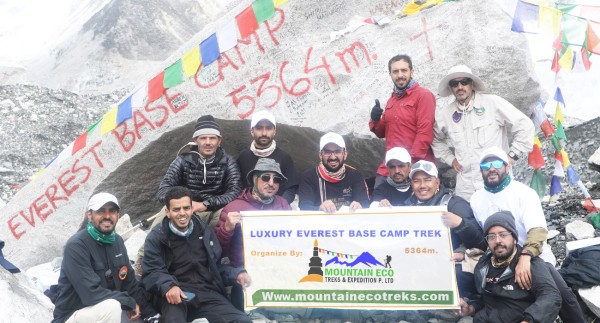
Our group enjoyed a wonderful spectacle of seeing Everest base camp and surrounding countryside
An area not to be underestimated for its beauty and dangerous weather conditions
Ram makes sure his clients are always well fed and ready for the days adventures
Mountain eco tours will be the company I choose again if I return to this majestic area
Thanks Ram for a wonderful two week experience
Date of experience: October 2018
Source :Trip Advisor
Lukas T
Germany
Absolute recommendation
9 Aug 2022
Would totally recommend Ram and our tour guide Bakktha to everyone. We did the three passes trek in the Everest region and it could not have been a better experience.
Organization was super smooth with Ram, and you could feel that he really tries to make this a grwat experience for you. For example, when stuck in Lukla due to weather conditions, Ram (and our guide Bakktha) really tried everything in their hands to get us back to Kathmandu fast and spent the whole day basically on the phone. Successful, in the end, and I believe we would have been stuck for another 2-3 days if it was not for them :)
Bakktha was a very kind and helpful guide that enriched our trek with grst organization and a lot of interesting information on the region. And he loves to play cards, which was great for us :)
All in all, I would always organize it again with Ram and Bakktha
Source: Trip Advisor
Jakob F
Germany
Three passes trek
1 Apr 2022
I loved the three passes trek. Great 18 days with awesome views and nice walks. And ram with his organisation and our guide bakktha did everything to make this trip unforgettable.Planning our trip was easy because email and telephone communication with ram was perfect. He told no lies and talked honestly about the costs and challenges of the trip.
The lodges were as good as possible up there at the trek.
Even when we had problems with our flights to and from lukla because of bad weather or technically problems with the aircraft ram and bakktha did hundreds of phone calls to manage that we didn't lose so much time.I would totally recommend the organisation. They are very nice, honest and speak good english.
Source : Trip Advisor
Alex X
Germany
Super!
14 Jun 2022
Ram was very Kind. with the Organisation everything Went pretty smooth. It was easy to Plan and easy to Change things. Also all the Fix Cost we talked about were True and their where no side cost. Except dir the things we talked about up Front. Even when we had some Problems at lukla Airport Ram Made a lot of phone calls and made it possible for us to leave early. So their is nothing Bad i can say. It was very well organisiert, the prices are fair and Ram is Friendly and helps a lot. So i would do Trips with him anytime again and also recomment him to My Friends!
Adderss: Berlin, Germany
Source : Trip Advisor
UHE G
Sri Lanka
Ut of this world !!
4 Nov 2022
Three passes and Island peak summit trek !
Absolutely loved every minute of it. Very professional and fun guide lokendra made it all posible. Thanks ram for organising everything ! Will return for Mera peak next year !!!
Source :Trip Advisor